DETROIT EVENT & JOBSITE GUIDE
5 min read | Detroit, MI | Unit Comparison
Need a Trailer or Units Fast? Call (313) 385-3332
Porta Potty vs Restroom Trailer: Which Do You Need?
Planning an event or a job site in Detroit and stuck on the porta potty vs restroom trailer decision? Both get the basic job done, but they are built for very different situations. Pick the wrong one and you either overspend on comfort nobody needed — or end up with a setup that feels out of place for the occasion.
This guide compares the two across comfort, cost, capacity, setup, and hookups, with honest guidance on when each one wins — including Detroit-specific scenarios like Belle Isle weddings, Hart Plaza festivals, downtown construction, and Michigan winter events.
In This Guide
- What Is a Standard Porta Potty?
- What Is a Restroom Trailer?
- Porta Potty vs Restroom Trailer: The Real Difference
- Cost Comparison: Porta Potty vs Restroom Trailer
- When a Porta Potty Is the Right Call
- When a Restroom Trailer Is Worth the Upgrade
- Can You Use Both? The Mix Strategy
- Detroit Events: Which Fits Where
- Quick Decision Checklist
- Frequently Asked Questions
- Which One Do You Need? Ask Detroit’s Local Providers
What Is a Standard Porta Potty?
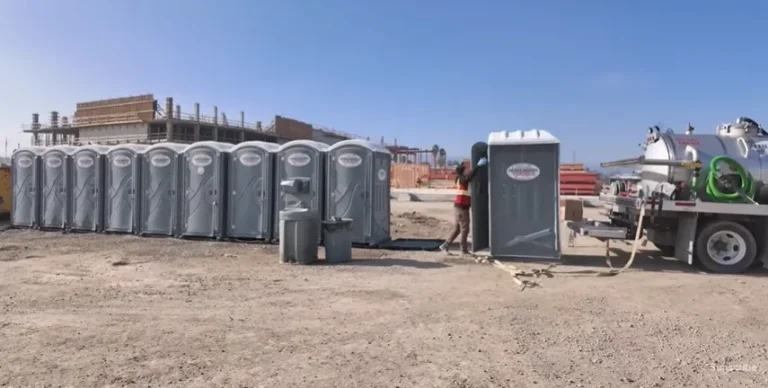
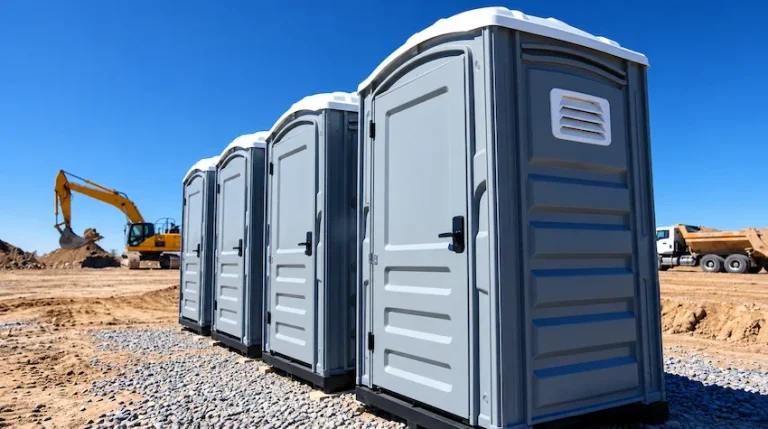
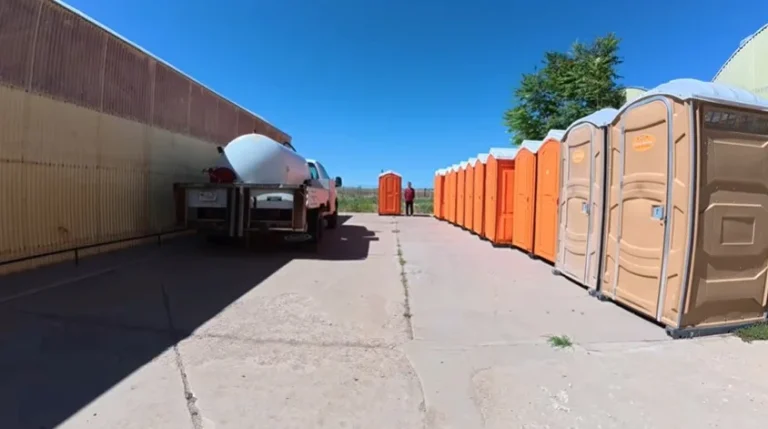
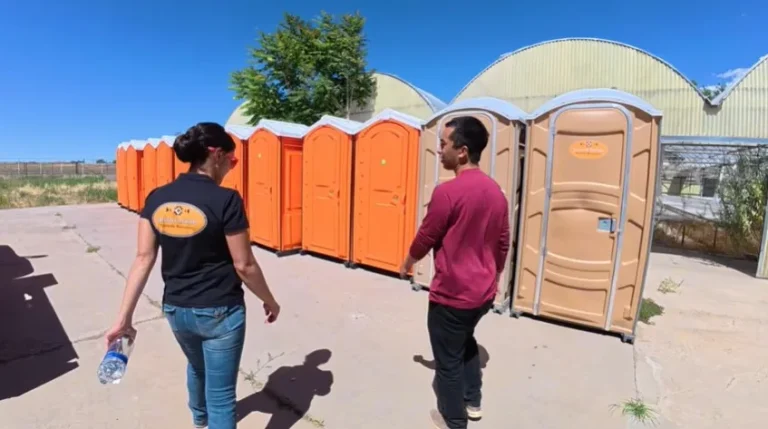
A standard porta potty is a compact, self-contained unit: a toilet seat over a sealed holding tank, basic ventilation, and room for one person at a time. It needs no water hookup and no power — a service truck drops it off, pumps and cleans it on schedule, and hauls it away when you are done.
It works best for:
- Construction sites and work crews
- Backyard parties and casual outdoor gatherings
- Short-term events on a tight budget
- Locations with limited space or no utilities
Standard units are the workhorse of the industry for a reason: lowest cost, fastest setup, easiest to scale. Need more capacity? Add more units — see our porta potty quantity calculator guide to size your order.
What Is a Restroom Trailer?
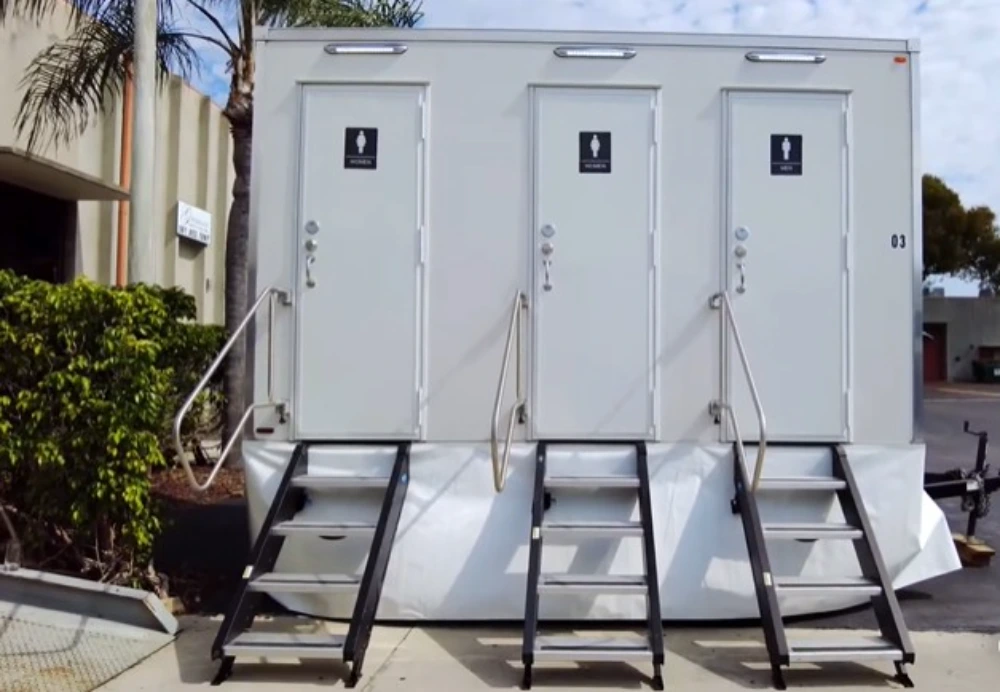
A restroom trailer is a towable unit built more like a small indoor bathroom: flushing toilets, sinks with running water, mirrors, interior lighting, multiple private stalls, and often heating and air conditioning. Multi-stall trailers can split into men’s and women’s sections — something standard units cannot do.
It works best for:
- Weddings and upscale outdoor events
- Corporate functions where presentation matters
- Multi-day festivals with heavy guest traffic
- Any setting where guests expect an indoor-bathroom experience
The trade-off is infrastructure: most trailers need a power source (or a generator option) and sometimes a water hookup, though many run on onboard fresh-water and waste tanks. They also need level ground and more room for delivery and placement.
Pro Tip: In Detroit, winter is the sleeper reason to choose a heated restroom trailer — it stays usable through freezing temperatures that make a standard porta potty miserable. For November through March events or job sites, climate control is not a luxury; it is what keeps the facility functional.
Porta Potty vs Restroom Trailer: The Real Difference
The real difference is comfort and infrastructure versus cost and simplicity. A porta potty is a self-contained tank you can drop anywhere with no hookups — cheap to run, easy to scale. A restroom trailer gives you flushing toilets, running water, and climate control — but it needs power, sometimes water, and costs several times more to rent and service.
| Factor | Standard Porta Potty | Restroom Trailer |
|---|---|---|
| Typical cost | Lowest ($75-$150/day per unit) | Several times more ($850-$2,500+/event) |
| Flushing toilets | No (chemical/holding tank) | Yes, real flushing |
| Running water sinks | No (sanitizer; stations rentable) | Yes |
| Hookups needed | None | Power; sometimes water |
| Capacity | 1 stall per unit; scale by adding units | Multiple stalls per trailer |
| Climate control | No | Often heat + A/C |
| Setup and placement | Drop anywhere, quick | Needs level ground, more space |
| Best fit | Crews, casual events, tight budgets | Weddings, VIPs, long events, cold weather |
Cost Comparison: Porta Potty vs Restroom Trailer
Cost is where the decision usually gets made. Typical 2026 market ranges:
- Standard porta potty: roughly $75-$150 per day per unit, $150-$300 per week, $125-$275 per month on construction terms.
- Restroom trailer: roughly $850-$1,500 per event for a basic two-stall unit, $2,000+ for multi-stall models, and $1,000-$6,500+ for luxury setups — plus $200-$400 delivery/setup in many markets.
The break-even math: for a 100-person event, standard units might total $200-$800, while a trailer runs $1,000-$2,500+. But per-guest, a trailer serving 150-200 guests across a full day can deliver better value than managing a dozen individual units — especially once you factor in the experience. For full 2026 market ranges by unit type, see our Detroit porta potty pricing guide.
Treat all figures as broad market ranges, not quotes. Region, season, service frequency, and amenities move every number.
Note: Most restroom trailers need a power source and sometimes a water hookup, plus level ground and extra room for delivery and placement. Confirm hookup needs with your provider before delivery day — many units run on onboard fresh-water and waste tanks, and generator options exist.
When a Porta Potty Is the Right Call
Choose standard porta potties when:
- Covering a work crew. Construction is the classic use case — functional restrooms at the lowest cost, no hookups, units that move as the work moves.
- Budget is the priority. For high-traffic, temporary setups where basic access is all that is needed, nothing beats the unit economics.
- The site has no utilities. Early-phase construction with no power or water on site is exactly what self-contained units are for.
- Space is tight. Individual units fit into alleys, side yards, and corners where a trailer cannot go.
- You need to scale fast. Doubling the crew? Add units. No reconfiguration required.
When a Restroom Trailer Is Worth the Upgrade
Choose a restroom trailer when comfort, capacity, or appearance changes the outcome:
- Weddings and formal events. Guests in formal wear need space, mirrors, and real sinks. A trailer keeps the restroom experience consistent with the event.
- Corporate and VIP settings. Client-facing sites, donor events, and executive gatherings call for the finished look.
- Multi-day festivals. Higher capacity per footprint and a better guest experience across long hours.
- Michigan winter events and job sites. This is the sleeper reason in Detroit: a heated restroom trailer stays usable through freezing temperatures that make a standard porta potty miserable. For November-March construction or cold-weather events, climate control is not a luxury — it is what keeps the facility functional.
- Long-duration projects with office staff. On a months-long build with a site office, a trailer near the office plus standard units for the crew is the standard playbook.
Available 7 Days in Detroit
- Local providers serving Detroit and the metro area — open Mon-Sat, 7AM-7PM · Sun 7AM-12PM
- Standard units, ADA units, and luxury restroom trailers for any occasion
- Emergency and same-day delivery when your plans change fast
Can You Use Both? The Mix Strategy
Yes — and many sites do. The most common setup in Detroit is standard porta potties spread across the work or event area for general coverage, plus one restroom trailer near the office, entrance, or VIP area. You cover the crew cheaply and raise the standard only where it matters.
For events, the mix often looks like standard units for general admission plus a trailer for the bridal suite, VIP tent, or performer green room. For construction, it is units across the site plus a trailer at the field office.
Detroit Events: Which Fits Where
- Belle Isle wedding (150 guests): A 2-4 stall restroom trailer for the reception is the expected standard; add a couple of standard units near the parking or ceremony overflow if needed.
- Hart Plaza festival (thousands, multi-day): Banks of standard units for general admission (scaled to crowd size), plus trailers for VIP areas and artist compounds.
- Downtown construction site: Standard units across the site per the crew count, with a trailer at the field office if inspectors and clients visit regularly.
- Backyard graduation party in the suburbs (80 guests, 5 hours): 2 standard units and a handwashing station — a trailer would be overkill.
- Winter job site in January: Heated restroom trailer, full stop. Standard units freeze; a climate-controlled trailer keeps the crew on schedule.
Quick Decision Checklist
Ask these five questions:
- What’s the formality level? Casual → porta potty. Formal → trailer.
- How many guests, and for how long? Under 50 guests and under 4 hours → porta potty usually wins. Over 100 guests or 6+ hours → the trailer’s comfort-to-cost ratio improves.
- What’s the season? Freezing temperatures push strongly toward a heated trailer.
- Are there utilities or level space? No power and tight space → porta potty. Room and hookups → trailer is viable.
- Who’s watching? Clients, donors, wedding guests, inspectors → trailer. Crew only → porta potty.
Frequently Asked Questions
Is a restroom trailer better than a porta potty?
Neither is better in every case. A trailer wins on comfort — flushing toilets, running water, climate control — for events, offices, and cold weather. A porta potty wins on cost, simplicity, and placement flexibility for crews and casual events.
Do restroom trailers need power and water?
Usually power, yes — for lights, pumps, and climate control. Many units run on onboard fresh-water and waste tanks (pumped by the service truck), and generator options exist, so confirm hookup needs with your provider before delivery day.
How many guests can one restroom trailer handle?
A 2-stall trailer comfortably serves about 75-100 guests; a 4-stall unit handles 150-200. For bigger crowds, providers scale with multiple trailers or a trailer-plus-units mix.
Can I rent both for the same event or job site?
Absolutely — it is one of the most common setups. Standard units for general coverage plus a trailer where comfort or appearance matters gives you the best of both.
Which One Do You Need? Ask Detroit’s Local Providers
Still deciding between a porta potty vs restroom trailer for your Detroit event or job site? Tell a local provider your headcount, dates, venue, and budget — they will recommend the right mix and give you an itemized quote.
Call Porta Potty Rental Detroit MI at (313) 385-3332 — Mon-Sat 7AM-7PM · Sun 7AM-12PM, 24/7 emergency service. We’ll connect you with Detroit-area providers for standard units, ADA units, and restroom trailers.
Ready to Book? Call (313) 385-3332
Talk to a local specialist today — compare your options, check availability, and get delivery scheduled across Detroit and the metro area.
Porta Potty Rental Detroit MI | 2211 Woodward Ave Suite 300, Detroit, MI 48201 | (313) 385-3332 | Mon-Sat 7AM-7PM · Sun 7AM-12PM, 24/7 emergency